

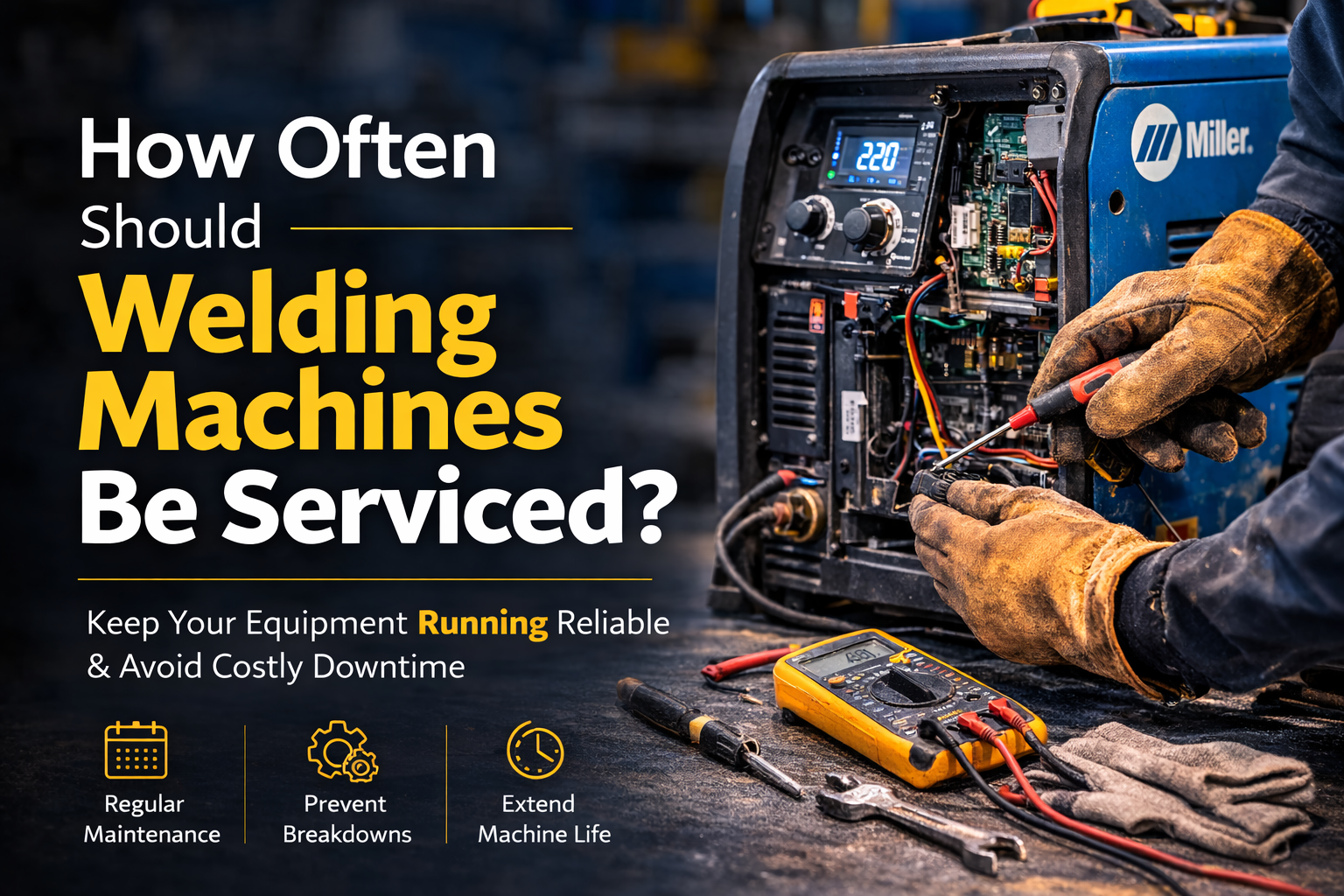
Welding machines are built to operate in demanding environments, but like any industrial equipment, they require regular maintenance to perform reliably over time. Many operators focus on fixing problems only after a machine stops working, yet routine servicing can prevent many of the most common failures.
For fabrication shops, construction companies, and industrial welders, equipment downtime can disrupt production and lead to costly delays. Understanding how often welding machines should be serviced is an important part of maintaining productivity and extending the lifespan of valuable equipment.
While there is no single schedule that applies to every machine, several factors determine how frequently maintenance should be performed. These include the type of welding equipment, the working environment, and how heavily the machine is used.
Why Regular Welding Machine Maintenance Is Important
Welding machines operate under significant electrical and thermal stress. Internal components such as power modules, cooling systems, circuit boards, and wiring connections must all function properly to maintain stable welding output.
Over time, dust, metal particles, and debris can accumulate inside the machine. This buildup restricts airflow and reduces the effectiveness of cooling systems, which may lead to overheating and internal component damage.
In addition to contamination, normal wear gradually affects electrical connections, relays, capacitors, and other components. If these issues are not addressed early, they can develop into larger problems that require more extensive repairs.
Routine servicing helps identify these issues before they cause machine failure. By keeping equipment clean and ensuring internal systems are functioning properly, regular maintenance significantly reduces the risk of unexpected downtime.
General Service Guidelines for Welding Machines
Although service requirements vary depending on usage, most welding machines benefit from a structured maintenance schedule.
In light-duty environments where equipment is used occasionally, basic inspections and cleaning may only be necessary once or twice per year. However, machines operating in fabrication shops or industrial settings typically require more frequent attention.
For equipment that is used daily, many technicians recommend performing a basic inspection every few months. This includes checking cooling fans, inspecting electrical connections, and ensuring the machine remains free of excessive dust buildup.
More comprehensive servicing, including internal inspection and testing, is usually recommended annually. During these service intervals, technicians evaluate critical components, verify electrical output, and identify potential problems that may not yet be visible during normal operation.
Environmental Conditions That Increase Service Frequency
The environment in which a welding machine operates has a significant impact on maintenance needs.
In many industrial workshops, airborne particles such as metal dust, grinding debris, and welding fumes are common. These contaminants are easily drawn into welding machines through cooling vents and fans.
Over time, this buildup can block airflow and place additional strain on internal components.
Machines operating in these conditions should be cleaned and inspected more frequently than those used in cleaner environments. In heavy fabrication settings, servicing every few months may be necessary to maintain optimal performance.
Similarly, machines exposed to outdoor environments, moisture, or extreme temperatures may require additional inspection and preventive maintenance.
Signs That a Welding Machine Needs Immediate Service
Even with a regular maintenance schedule, certain warning signs indicate that a welding machine should be inspected by a professional technician as soon as possible.
Operators may notice inconsistent arc performance, unexpected shutdowns, overheating warnings, or abnormal noises coming from cooling fans. These symptoms can indicate internal electrical issues or cooling system problems that require attention.
Another common sign is unstable output voltage or current, which may cause weld quality to deteriorate. If these issues are ignored, internal components may suffer further damage.
Addressing these problems early often allows technicians to resolve them quickly before more expensive repairs become necessary.
Preventive Maintenance That Operators Can Perform
While professional servicing is important, there are also several preventive maintenance steps that operators can perform to help protect their welding equipment.
Keeping machines clean is one of the most effective ways to extend their lifespan. Periodically blowing out dust and debris using compressed air helps prevent overheating and internal contamination.
Operators should also ensure that ventilation openings remain unobstructed. Blocking airflow can significantly increase internal temperatures and reduce the life of electronic components.
Inspecting cables, connectors, and welding leads for damage is another important step. Loose or damaged connections can create electrical resistance, which may lead to overheating and unstable welding performance.
These simple practices can significantly reduce the likelihood of machine failure between professional service intervals.
The Benefits of Professional Welding Machine Servicing
Although basic maintenance can be performed by operators, professional servicing provides a deeper level of inspection and testing.
Experienced technicians have the tools and expertise needed to evaluate internal electrical systems, test output performance, and identify components that may be approaching failure.
During professional service, technicians often examine circuit boards, power modules, cooling systems, and control components. Specialized equipment allows them to verify voltage output and ensure the machine is operating within manufacturer specifications.
This type of preventative maintenance can extend the life of welding equipment and prevent costly breakdowns during critical production periods.
Welding Machine Servicing in Toronto
For welders and businesses in the Greater Toronto Area, regular maintenance and servicing can help ensure equipment continues operating at peak performance.
At Link Technical Arc Services, technicians specialize in diagnosing, repairing, and servicing welding machines from major manufacturers including Miller, Lincoln Electric, and ESAB.
Each machine undergoes a thorough inspection process designed to identify potential issues before they lead to equipment failure. This proactive approach helps businesses avoid costly downtime and extend the life of their welding equipment.
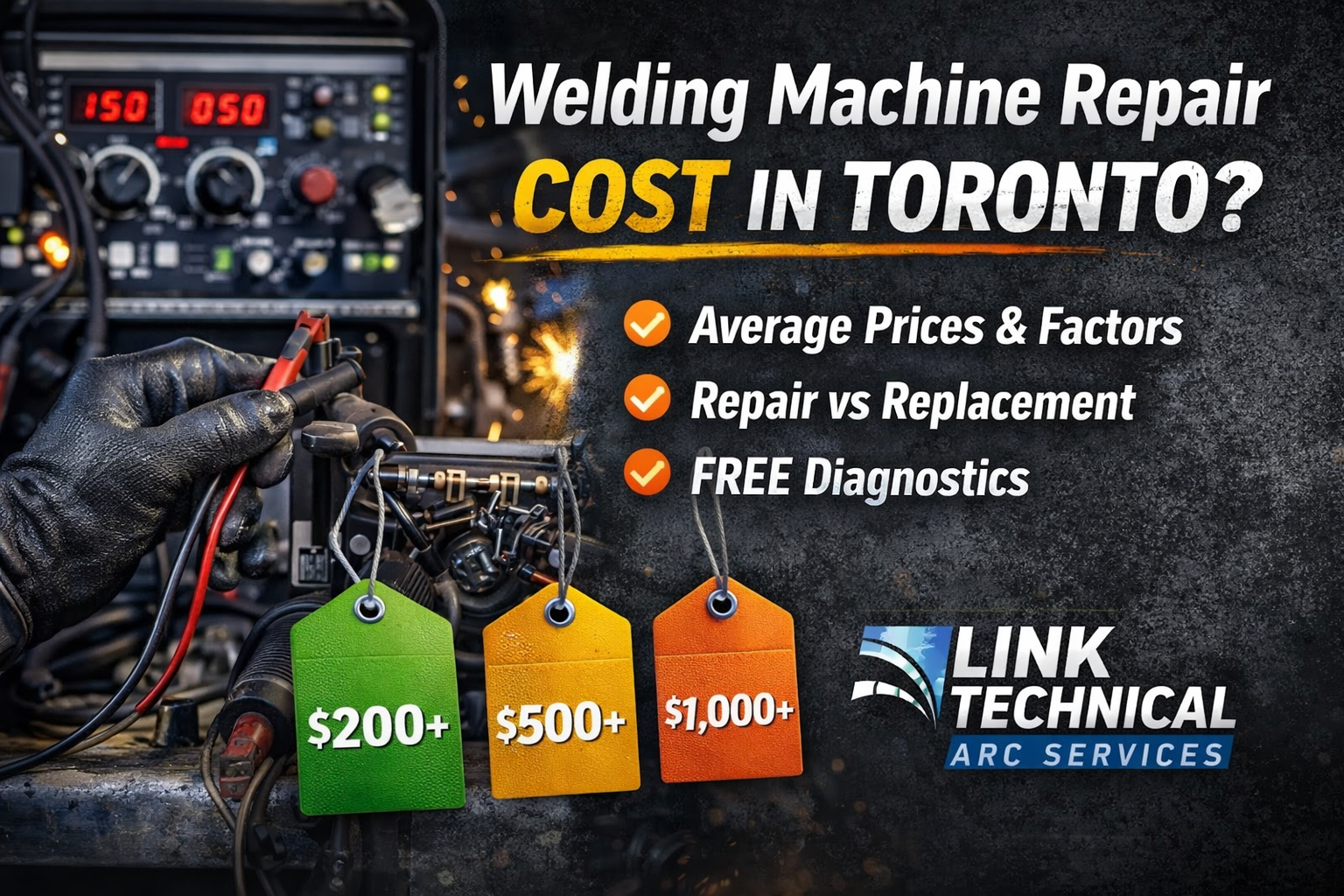
Link Technical also provides free diagnostics, allowing customers to understand the condition of their machines before proceeding with any repairs or servicing.
Final Thoughts
Welding machines are essential tools in many industries, and keeping them in good condition requires consistent maintenance.
While service intervals may vary depending on usage and environment, most machines benefit from regular inspection, cleaning, and professional servicing at least once per year.
Preventive maintenance not only reduces the risk of unexpected breakdowns but also helps ensure consistent welding performance and longer equipment lifespan.
For businesses that rely on welding equipment daily, routine servicing is one of the most effective ways to protect productivity and reduce long-term repair costs.

.jpg)


.png)
© Copyright 2025 Link Technical Arc Services, all rights reserved.